News
backA soldier’s health as a strategic element of the state’s security system [CONFERENCE SUMMARY]
During the conference “Soldiers’ Health – A Challenge for a Secure Future”, a White Paper was presented containing key findings and recommendations regarding soldiers’ health. The publication, prepared under the scientific editorship of Lieutenant General Prof. Grzegorz Gielerak and Prof. Bolesław Samoliński, constitutes a set of guidelines defining directions for action in the area of soldiers’ healthcare.
On 5 March 2026, the second conference in the series “Soldiers’ Health – A Challenge for a Secure Future” was held in Warsaw. The event, organized by the Kulsky Foundation and the Institute for Social Policy Development, served as an example of an initiative combining two areas of crucial importance for national defense and public health. During the debate, participants emphasized that national security and state resilience begin with the health, physical fitness, and psychological condition of individuals. In this context, soldiers’ health is a strategic element of the state’s security, requiring a long‑term, systemic approach.
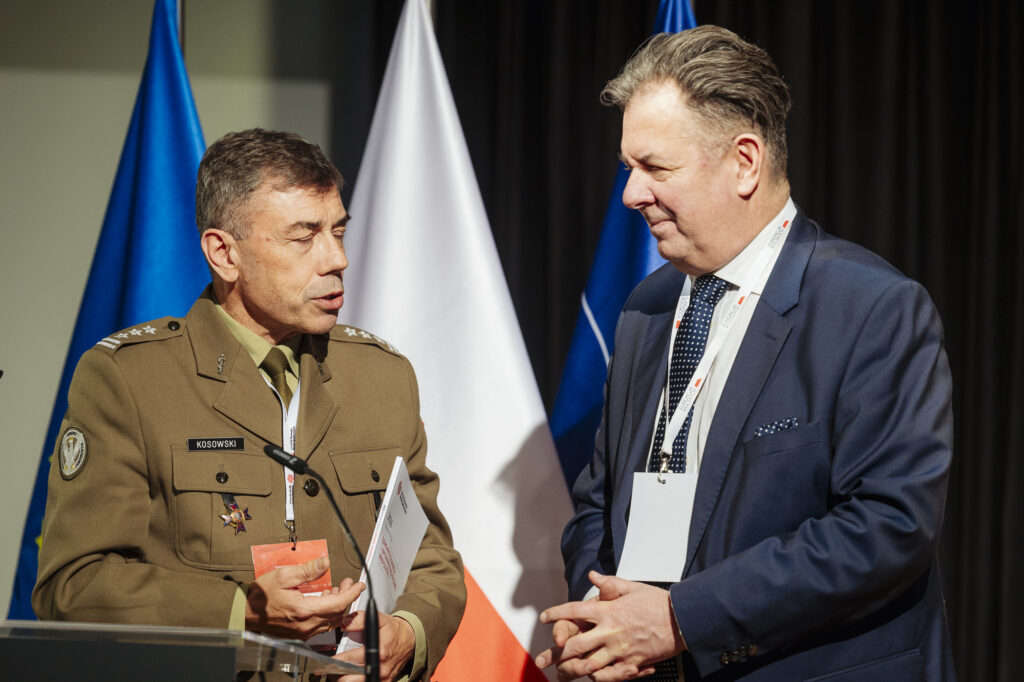
The conference gathered distinguished guests, experts, and practitioners. The address delivered by Prof. Piotr Czauderna, MD, PhD, Chair of the Health Council to the President of the Republic of Poland, placed the conference theme within the broader context of state security. He highlighted the need for better coordination of activities carried out by various public institutions. An important opening statement was delivered by Col. Arkadiusz Kosowski, MD, Director of the Military Health Service Department at the Ministry of National Defence, who aptly noted that if we want to seriously discuss the health security of the armed forces, we must first ask a fundamental question: where do we get healthy soldiers from? Equally significant was the contribution of Col. Andrzej Soboń, DSc, Dean of the Faculty of National Security at the War Studies University, who stressed that building state resilience should include not only the military in the strict sense, but also broader preparation of public and social structures for functioning in crisis situations.
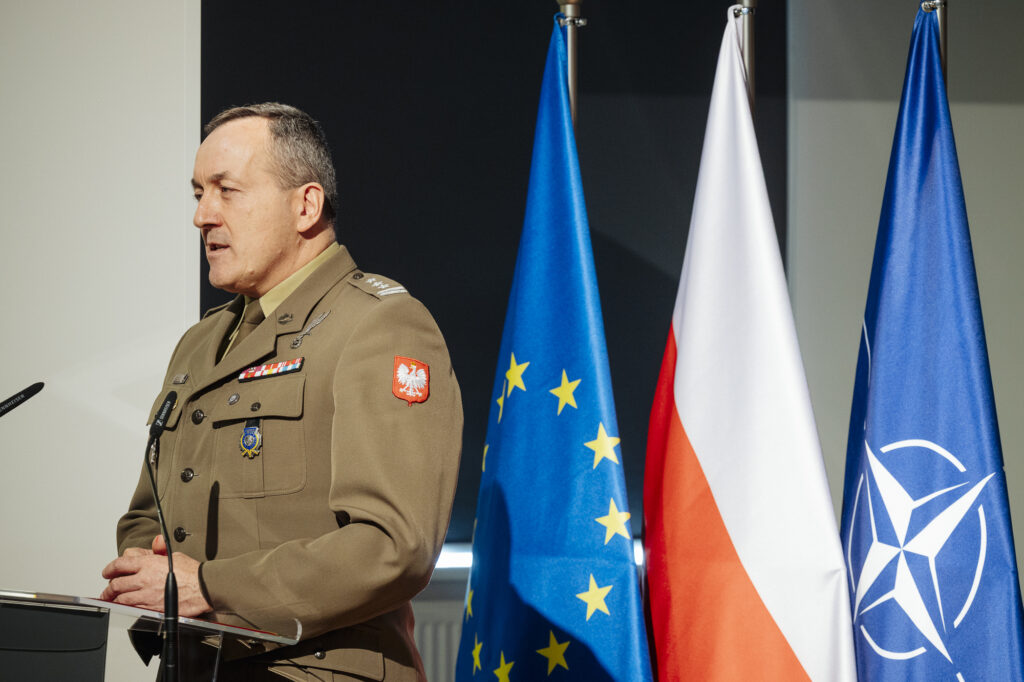
Lieutenant General Prof. Grzegorz Gielerak, Director of the Military Institute of Medicine – National Research Institute, presented research conducted by the Institute on cardiovascular risk assessment, analyzing the prevalence of risk factors among soldiers. “We examined a group of nearly 10,000 soldiers. Based on the results, it turned out that as many as 28% have hypertension, nearly 70% have lipid disorders, and 23% show symptoms or features of metabolic syndrome. One cannot expect a soldier to follow a healthy lifestyle every day without considering the conditions in which they serve. The organizational culture in which they operate daily is of key importance,” emphasized Gen. Gielerak.
He argued that if we want to have an efficient soldier, their “operational readiness does not begin at the moment of threat, but much earlier – with the quality of prevention, the effectiveness of screening tests, vaccinations, health education, and the efficiency of a system capable of identifying risks early enough.”
The first panel focused on practical aspects of soldiers’ healthcare: health promotion, prevention, diagnostics, and pharmaceutical security. Attention was drawn to various health threats, including sexually transmitted infections. As noted by Prof. Miłosz Parczewski from the Department of Infectious, Tropical and Immune Deficiency Diseases at the Pomeranian Medical University in Szczecin, President of the Polish Scientific AIDS Society, “It is important to remember that effective prevention methods exist. In cases of exposure, HIV prophylaxis can be used both before and after potential contact. In the context of HIV, we can act relatively quickly – this is standard and well‑established practice.” The panel also addressed issues related to other infections, obesity, vaccinations, and highlighted the importance of health education.
The second panel directed participants’ attention to the organization of care supporting continuity of service – an area where soldiers’ physical and mental health intersects with logistics, system organization, rehabilitation, convalescence, and long‑term support after service. A valuable practitioner’s perspective was offered by Paweł Mateńczuk “Naval”, plenipotentiary of the Minister of National Defence for changes in military service criteria and former operator of the GROM special forces unit, who shared experiences drawn from real service conditions. His remarks emphasized that behind every systemic category, procedure, and expert debate stands a human being – a soldier with their biography, experiences, and family. Meanwhile, Dr. Radosław Tworus, national consultant for defense in psychiatry and head of the Clinic of Psychiatry, Combat Stress and Psychotraumatology at the Military Institute of Medicine – NRI, pointed to the scale of challenges related to soldiers’ mental health and the need to build a coherent and coordinated model of care for military personnel.
The third panel focused on cybersecurity and countering disinformation in the field of health. The issue of digital resilience in the healthcare system and health‑related disinformation as a tool for destabilizing the state still appears too rarely in public discourse.
Today, health infrastructure, data flow, information credibility, and public trust are becoming areas of strategic importance. Therefore, Brigadier General Krzysztof Bondaryk, Director of the Security Department at the Ministry of Interior and Administration and former Director of the National Cryptology Centre at the Ministry of National Defence, emphasized that disinformation is no longer merely background noise or a communication problem, but a real tool for weakening the resilience of the state and its citizens. “Countering disinformation is what we call the propaganda of truth. Facts and truth, however, will not defend themselves. This requires action from both the state and citizens. It is also crucial to create a kind of repository of truth – a place that clearly determines what is a deepfake and what is not, and what constitutes the essence of a true message. To believe in what is true, one must have access to reliable and verified sources of information,” Gen. Bondaryk noted.
Col. Piotr Murawski, PhD Eng., Head of the Teleinformatics Division at the Military Institute of Medicine – NRI, highlighted the threats associated with cyberattacks on healthcare facilities, the risk of IT system paralysis, the need for effective protection of medical documentation, and the growing danger of ransomware attacks. He stressed that the loss of trust in health information can have consequences just as serious as the loss of the healthcare system’s physical infrastructure.
Honorary patronage of the conference was held by:
- Władysław Kosiniak‑Kamysz – Deputy Prime Minister, Minister of National Defence
- Jolanta Sobierańska‑Grenda – Minister of Health
- European Economic and Social Committee
- Lt. Gen. Prof. Grzegorz Gielerak, MD, PhD – Military Institute of Medicine – National Research Institute
- Gen. Mieczysław Gocuł, PhD – Rector of the War Studies University
- Brig. Gen. Prof. Przemysław Wachulak, DSc Eng. – Rector‑Commandant of the Military University of Technology
- “Teraz Polska” Polish Promotional Emblem Foundation