News
back“Health is our shared responsibility.” Conclusions from the conference “Health at the Center – Public Policy in Action”
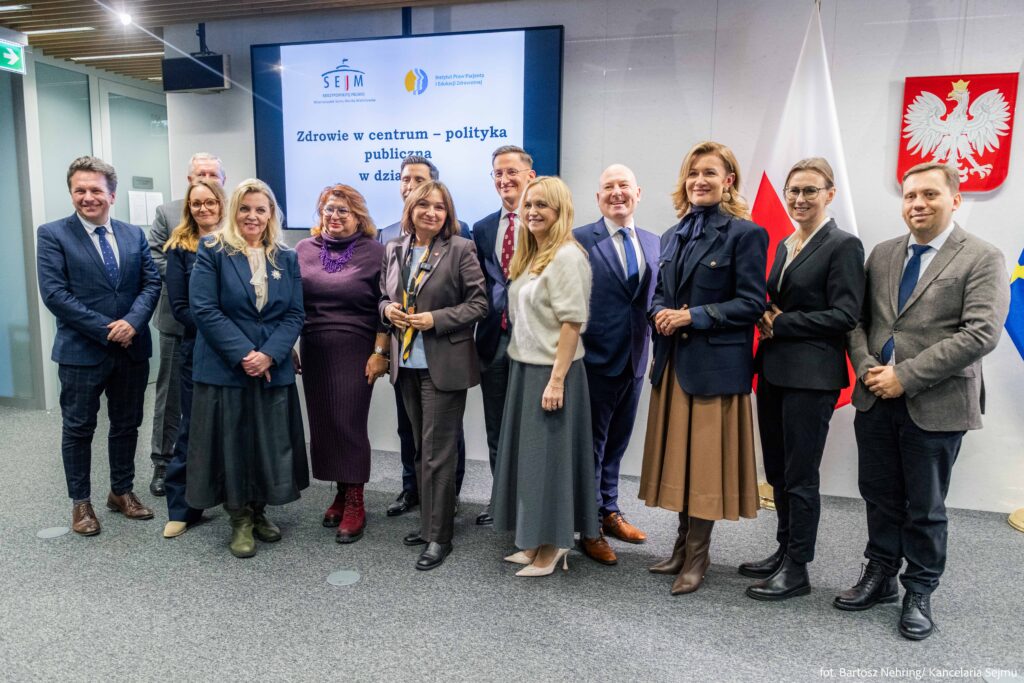
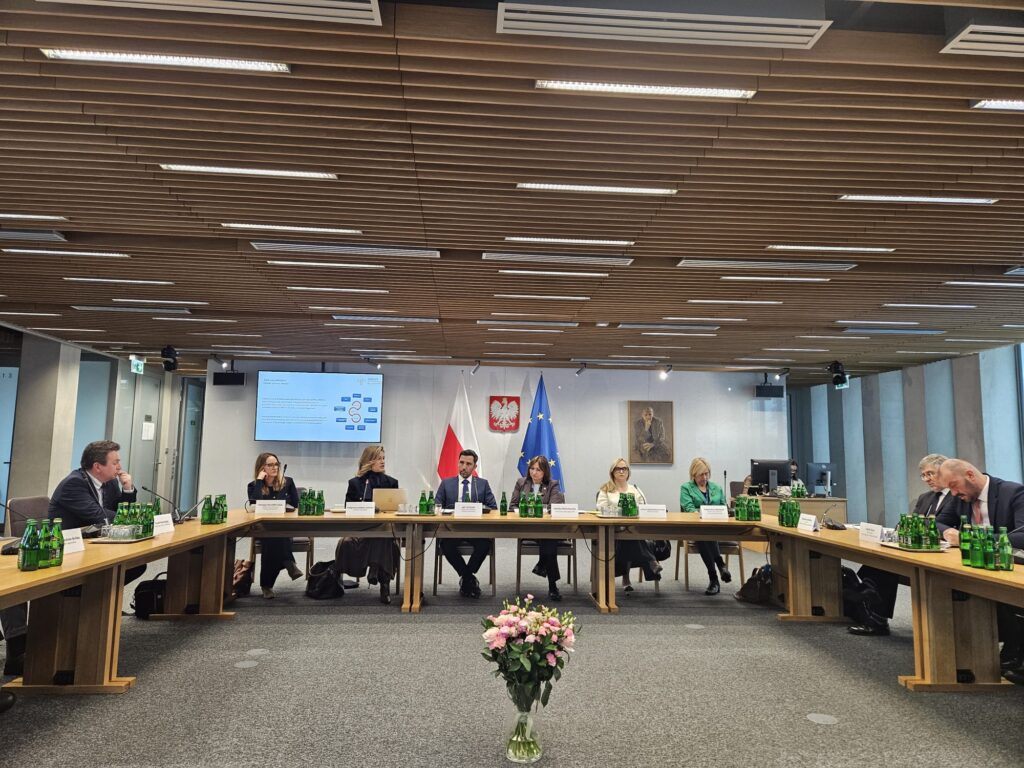
The team of the Institute for Social Policy Development took part in the conference “Health at the Center – Public Policy in Action.” The event was convened in the Polish Parliament (Sejm) at the joint invitation of Monika Wielichowska, Deputy Speaker of the Sejm, and the Institute for Patient Rights and Health Education. It gathered representatives of public administration, expert communities, and patient organizations.
During the meeting, attended by Minister of Health Jolanta Sobierańska-Grenda, discussions focused on shaping the country’s health policy. Participants emphasized that healthcare is one of the most important factors in social and economic development as well as national security, and should be treated accordingly.
Speakers analyzed both current systemic problems in healthcare and potential solutions. Much attention was devoted to the difficult situation in healthcare financing, which requires not only temporary support from the state budget but also organizational changes. It was noted that healthcare costs are rising faster than expenditures. The cost of medical services has increased sharply since 2020, particularly in hospital care.
“We are at a point where we must ask ourselves: what next? The system in its current form is not financially sustainable,” said Jakub Szulc, Vice President of the National Health Fund. He added: “We must introduce new legal regulations. Healthcare should be financed from the state budget, not only from contributions. Patients must understand how legal regulations affect their lives.” Dr. Jakub Gierczyński, MBA, a healthcare system expert, stressed: “Health is not only an expense—it also generates income for the economy. In Poland, 17 million people are employed, and 10% of them work in healthcare. Doctors, medical staff, and support personnel are consumers who contribute to GDP growth.”
Dr. Małgorzata Gałązka-Sobotka, Director of the Institute of Healthcare Management at Łazarski University, underlined that health is not limited to medical care. Public health and long-term care are equally important for the well-being of society. Everyone should feel responsible not only for their own health and that of their loved ones but also for addressing risks in their wider environment. Recent data collected by the National Health Fund show that children’s health is a key concern: 15% struggle with obesity, 30% have sleep problems, 25% suffer from cyberbullying, and 20% battle depression.
All participants agreed that health should be treated as a vital element of state security. Therefore, understanding and cooperation are needed at every level—among policymakers, medical staff, patients, and society as a whole. Education and awareness must be strengthened to ensure that health is recognized as a personal priority. Healthcare is not only about financing but also about training, tools, and raising staff competencies.
The Need for Change and Better Communication
Dr. Małgorzata Gałązka-Sobotka emphasized: “We must clearly define what we want to achieve, how to achieve it, and how much it will cost. Let us consider external sources of financing. For example, local governments that strive to improve healthcare organization could receive grants.”
Joanna Frątczak-Kazana from the Alivia Foundation presented the patient perspective, stressing that patients expect to be treated as partners. “We must begin to speak openly about healthcare financing and increasing expenditures. Let us build patient awareness, educate, encourage screening tests, and remind people of the importance of prevention,” she said.
2026 – The Year of Prevention
Minister of Health Jolanta Sobierańska-Grenda highlighted the Ministry’s priorities: digitalization of healthcare, heart health, brain health, and prevention. She stressed that while the patient should be at the center of action, individuals must also take responsibility for their own health. “We have many preventive programs financed by the National Health Fund, and we must encourage patients to use them. Too often, people seek help only when their health seriously deteriorates. Prevention is just as important as treatment,” she explained. She concluded: “The healthcare system is our shared responsibility. We must communicate openly about the challenges ahead and the problems that need to be solved.”
Deputy Speaker Monika Wielichowska added: “I would very much like health to be taken out of political disputes. Today’s meeting shows that health can unite us all, despite our different backgrounds.”
A few days earlier, the Sejm declared 2026 the Year of Health Prevention. Wielichowska informed participants that the common goal should be to treat prevention on par with treatment.
The November 25th meeting was one of many, with participants already committed to further debates.