News
backHow and when will the healthcare system in Poland change? The 21st Health Market Forum has concluded
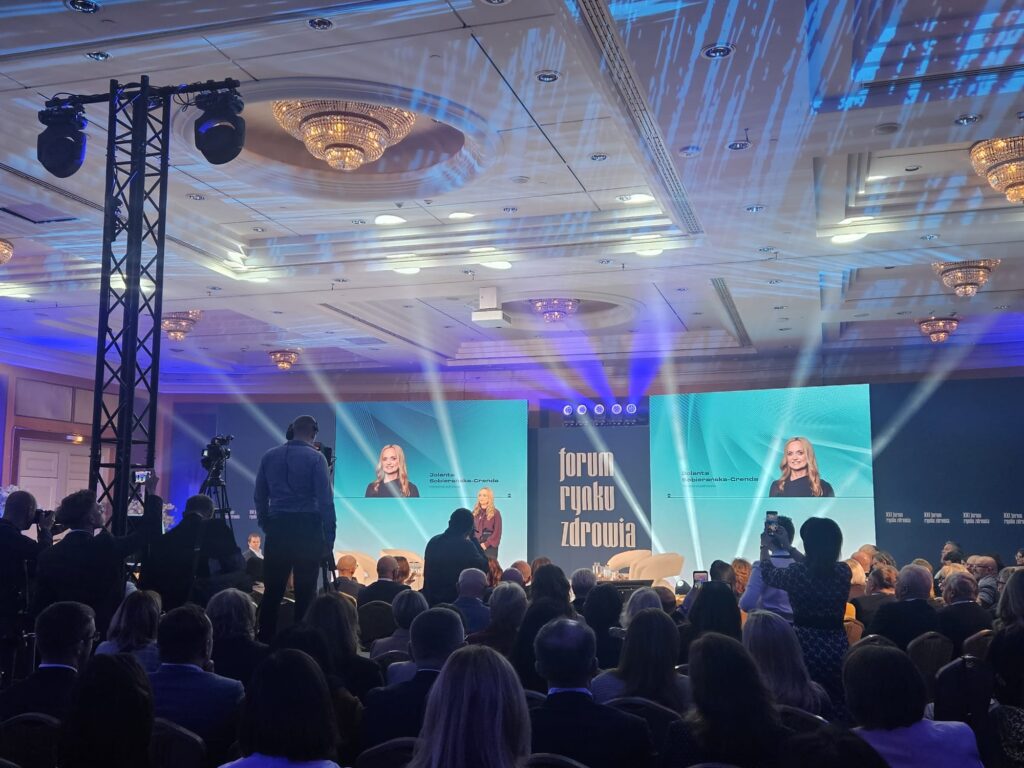
The 21st Health Market Forum titled “Between Legislation and Grassroots Initiatives – How the Healthcare System Is Really Changing” took place on October 20–21 in Warsaw. This year’s edition gathered 3,000 participants, including 1,600 attending in person. Several debates featured leaders, representatives of public institutions, and experts who collectively shape Poland’s healthcare system. It was a time for exchanging views and opinions among all those working with and for patients. Speakers outlined directions for necessary changes and new strategies, both legislative and organizational.
Day One: Digitalization, Health Education, and Hospital Reform
Minister of Health Jolanta Sobierańska-Grenda and Presidential Advisor Prof. Piotr Czauderna, a pediatric surgeon from the Medical University of Gdańsk, opened the Forum.
“We must revise service baskets, reassess procedures, address doctors’ salaries, and stabilize hospital finances. We are conducting a responsible dialogue with all stakeholders,” emphasized Minister Sobierańska-Grenda.
Both Sobierańska-Grenda and Prof. Czauderna agreed on the need to introduce a salary cap for medical professionals employed in the public healthcare system.
“We must make society aware that the system is on a downward slope. The time has come for difficult decisions. We need to seriously discuss increasing the health insurance contribution and redirect the system’s philosophy. Today, we mostly treat patients in hospitals—the most expensive option. (…) Doctors and nurses now earn decent wages, which was necessary, but wage growth cannot continue indefinitely,” said Prof. Czauderna.
Deputy Health Minister Tomasz Maciejewski added:
“The number of threats is increasing—we must be prepared. That’s why we’re cooperating with the Ministry of Digital Affairs. We aim to improve patient care, service accessibility, and reduce waiting times. We’re planning many solutions for patients and medical staff. We’ve already launched training for the central e-registration system.”
Experts emphasized prevention as the best investment in oneself. Physical activity, diet, and regular check-ups are crucial, but effective prevention requires education—raising awareness and personal responsibility for lifelong health.
“The more ministries, including the Ministry of Sport, get involved, the easier it will be to promote prevention and health, which is far more cost-effective than curative medicine,” noted Deputy Health Minister Katarzyna Kęcka.
Health education must not be overlooked. Children should learn from an early age how to care for their health and understand its importance later in life.
“We must support them intellectually and emotionally to meet the challenges posed by school,” stressed Deputy Education Minister Paulina Piechna-Więckiewicz.
Day Two: Cardiology, Mental Health of Youth, and Safety
The second day began with a panel on the mental health of children and adolescents.
“Young people want to be heard. The pandemic, hate speech, and everyday problems intensify anxiety disorders among youth,” said Paweł Mrozek, social activist and founder of the Student Action initiative supporting children and youth.
“We need inter-ministerial cooperation and, above all, attentiveness,” emphasized Dr. Aleksandra Lewandowska, National Consultant in Child and Adolescent Psychiatry.
Children’s Rights Ombudsperson Monika Horna-Cieślak added:
“We cannot ignore the signals children send us. Let’s talk to them—they need it. Let’s educate about the importance of mental well-being.”
In the hemato-oncology panel, experts called for a comprehensive approach to treatment. Patients should receive effective therapy, maintain quality of life during treatment, return quickly to work, and feel comfortable.
Cardiology was also discussed, including the National Cardiovascular Disease Program, support for pediatric cardiology, and the National Cardiology Network—all centered on keeping the patient at the heart of care.
“A well-cared-for patient is a safe patient,” said Lieutenant General Prof. Grzegorz Gielerak, Director of the Military Medical Institute.
Leaders and experts agreed: the healthcare system needs reform and collective action.
The Institute for Social Policy Development was a partner of the 21st Health Market Forum.
Source of selected quotes: Rynek Zdrowia